Here Hai, Bangkok's Queue Magnet: Crab Fried Rice That Won Me Over
A personal take on Here Hai's crab fried rice, crab omelette, daytime opening hours, queues, delivery and cash-only payments in Bangkok.
15 Oct 2026
An opinionated look at Jeh O Chula and Baan Kook Kai, weighing viral Mama noodles against queues, flavor and alternatives around Chula.
Author pending · 15 Oct 2026 · 5 min read · 0 views
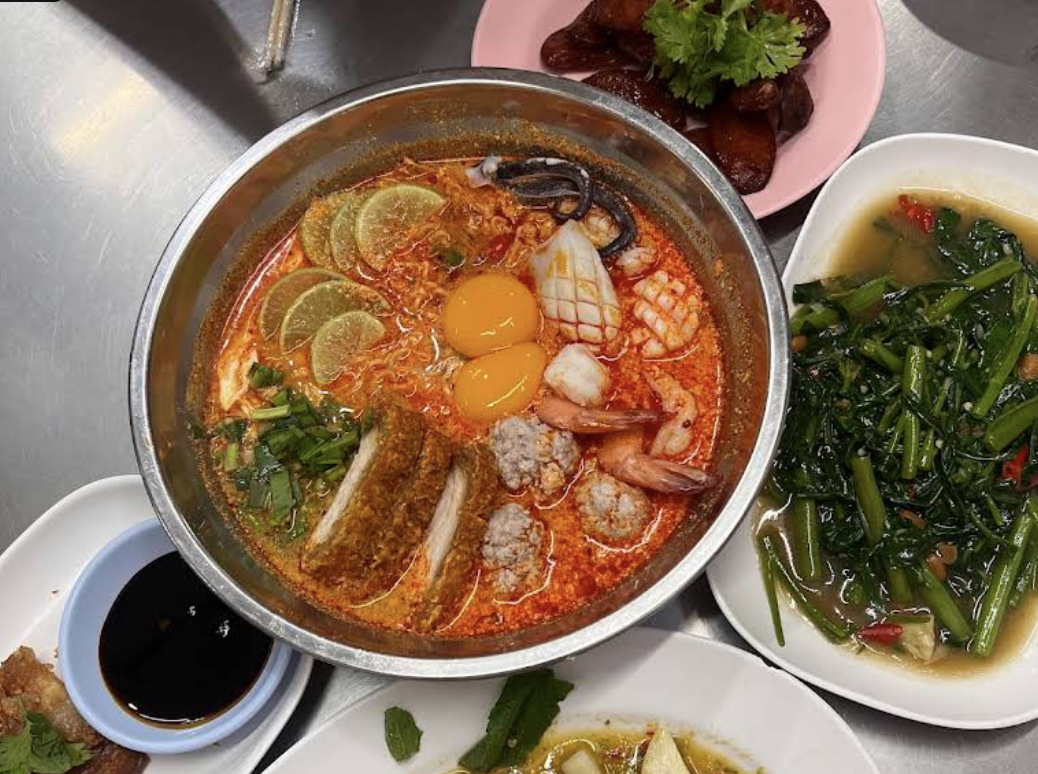
On Bangkok's food map, the area around Chulalongkorn University—Chula—is a magnet for attention. That viral bowl of Mama noodles in particular seems to suggest that, without a photo holding the enormous bowl, your Bangkok trip doesn't count. But as a longtime Bangkok food lover who's eaten through countless streets and alleys, I need to offer a little honesty before the influencer filters overwhelm everyone. Today, let's discuss the two venues at the center of the storm: Jeh O Chula and Baan Kook Kai.
Ask Bangkok locals where the most famous Mama noodles are, and there's only one answer: Jeh O Chula. Open since 1961, it has been around for more than half a century. It began as an ordinary food stall serving nearby students and residents. A few years ago, its bowl of seafood Mama noodles earned it Michelin Bib Gourmand recognition, turning a late-night eatery into a global attraction.
1. How Did It Become So Famous?
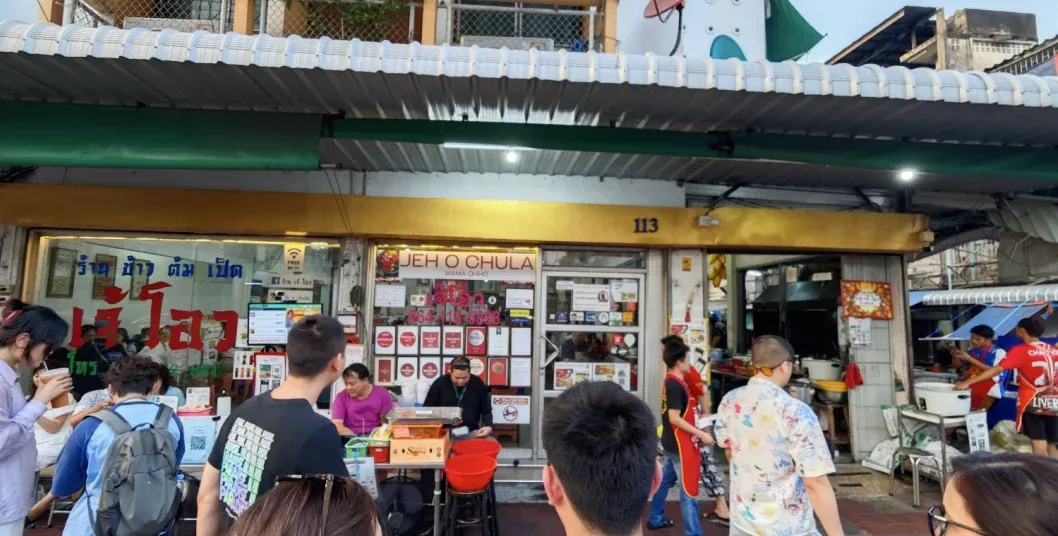
Jeh O succeeded by turning Thailand's everyday Mama instant noodles into an occasion.
Visual impact: a huge bowl piled with prawns, squid, handmade meatballs and crispy pork belly, with two glossy raw egg yolks in the middle. That visual abundance is perfectly suited to social media.
Maximum intensity: the broth isn't just hot and sour. Double or even triple concentrations of coconut milk and secret spices give it a thick, almost creamy texture. That aggressive approach to seasoning instantly appeals to palates seeking novelty.
Jeh O has genuine history, but its enormous fame has now distorted the dining experience.
Arrogant rules: the owner is confident enough to close whenever they like over holidays, often putting a little note on the shutter to announce a break of half a month.
An endless wait on your feet: even if you take a number through QueQ or hire someone to queue, waiting an hour or two still comes at a considerable cost.
A disconnect on the palate: toppings aside, the noodles are still industrial instant noodles. For diners seeking balance and finesse, paying 880 baht for an intensely salty, sour, spicy and rich bowl may not be especially enjoyable.
If Jeh O is old money, Baan Kook Kai is the social-media newcomer born with a silver spoon. Its rapid rise on Xiaohongshu owes much to understanding younger customers—and celebrity check-ins boosting its profile.
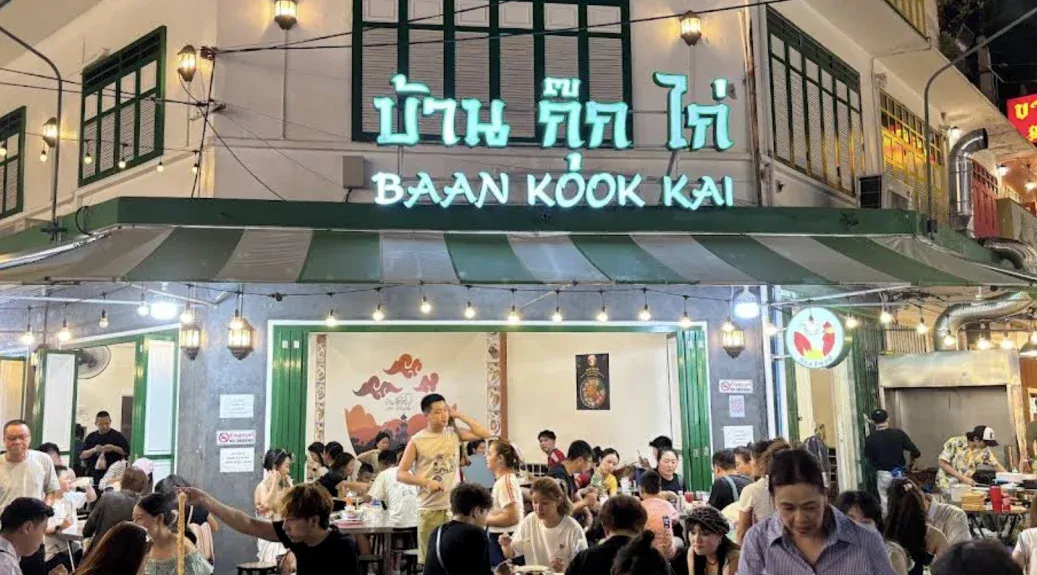
Visits by celebrities such as Yu Shuxin put Baan Kook Kai on Chinese tourists' must-visit lists almost overnight. Compared with Jeh O's slightly shabby old-school appearance, it's tidier and closer to the Chula night market.
Without a large crab to provide the spectacle, Baan's prices are considerably lower than Jeh O's. That doesn't automatically mean better value.
One-note flavor: many diners say the Mama noodle broth lacks depth. If Jeh O is a rich symphony, this may be a single high note—sour, followed by more sour.
Cooking gone wrong: in a busy viral restaurant, the rush to turn tables can lead to serious quality-control problems. Take the morning glory so many diners complain about: soggy and wet, with none of the wok aroma a Thai stir-fry should have.
The gap between service and surroundings: as queues grow, service standards fall sharply. You're paying a substantial amount for an ordinary meal in a noisy setting, even though I see several Chinese influencers whenever I pass.
If both places attract so much criticism, why do people keep coming? That's the attention trap. To help readers avoid becoming easy targets, here are a few blunt suggestions:
Bangkok's Mama noodles are essentially a variation on tom yum broth. If you don't even enjoy ordinary tom yum, or only like mild food, don't join the crowd just for the sake of it. Both venues aim to jolt late-night taste buds with extremely sour, spicy flavors. If your stomach doesn't tolerate that, the result may be tears rather than pleasure.
On Xiaohongshu, many bloggers describe mediocre food as heavenly in pursuit of views. Remember: if a post praises only the photos and celebrity connection while avoiding queue times and flavor details, it is probably designed to draw you in rather than inform you.
In traffic-heavy Bangkok, spending 40 minutes in a taxi and 2 hours queuing for noodles costs more than energy and money: it drains your precious holiday mood. Chula has far more good places to eat than these two.
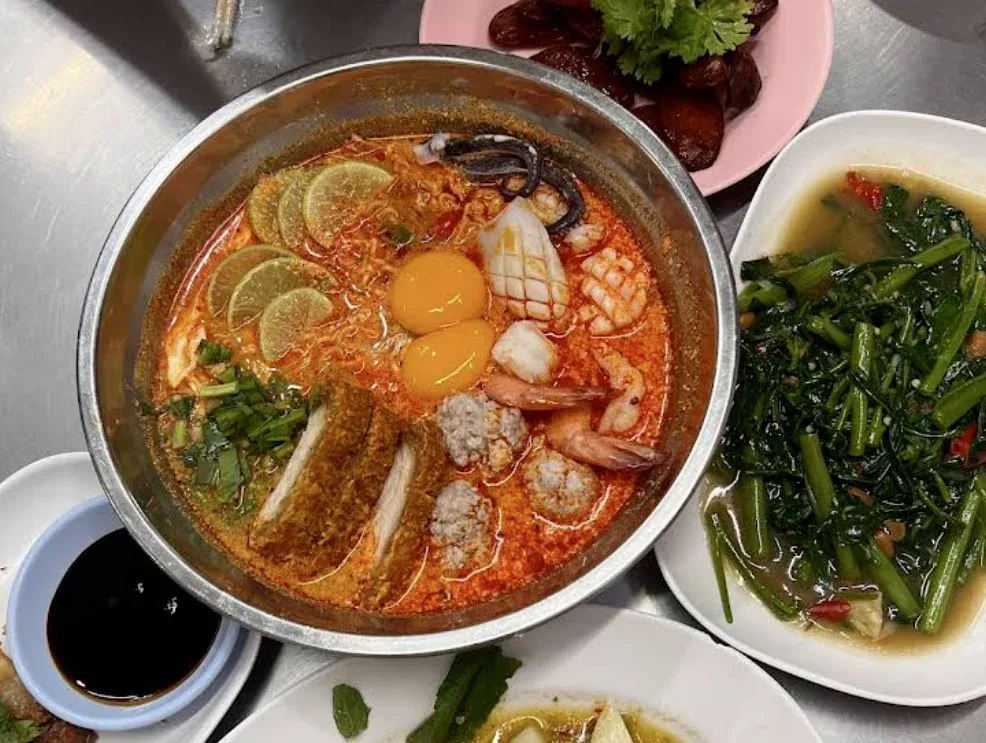
If you're already in Chula and the crowds outside these two venues look hopeless, don't be discouraged. A real food lover will tell you: turn around and try somewhere else.
Right across from Baan Kook Kai is another good restaurant, even with an air-conditioned room upstairs. Besides Mama noodles and Thai-style raw marinated prawns, it does an excellent recreation of Cantonese braised dishes.
Speed: none of the bad habits of viral restaurants here: order, stir-fry, serve, all in one smooth sequence.
Solid flavors: places like these mainly serve local residents and Chula students, who are demanding diners. They couldn't survive if the food wasn't good.
Value: without the celebrity premium and promotional costs, prices return to what you'd expect in Bangkok.
Jeh O Chula is a classic of its era, representing the heights of Bangkok's late-night dining culture. Baan Kook Kai is a product of the attention economy, satisfying the demand for quick, photogenic check-ins.
A personal take on Here Hai's crab fried rice, crab omelette, daytime opening hours, queues, delivery and cash-only payments in Bangkok.
15 Oct 2026
A late-night stop on Sukhumvit for affordable pad kra pao, comforting noodle soup and the dependable flavors of Krua Khun Puk.
14 Oct 2026
THAI OWL MEMBERSHIP
Understand membership access and individual article purchases, then choose the reading option that suits you.
View membership plans